
Mumbai 3.0 Location: The Definitive Guide to India’s Next Mega Urban Transformation
Introduction to Mumbai 3.0
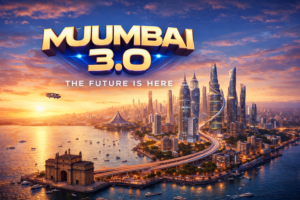
We are witnessing the dawn of a new urban era in India, and at the center of this transformation stands Mumbai 3.0. Designed as a future-ready metropolitan expansion, Mumbai 3.0 represents the next phase of development after South Mumbai and the Mumbai Metropolitan Region (MMR). This ambitious initiative is not just an extension of the city; it is a strategically planned economic, residential, and infrastructure-driven corridor that aims to redefine urban living, connectivity, and investment potential.
Mumbai 3.0 is positioned to become a global-standard urban cluster, integrating smart infrastructure, industrial growth zones, logistics hubs, and sustainable residential developments. The location selection is deliberate, data-driven, and aligned with long-term national economic goals.
Mumbai 3.0 Location: Where the Future Is Being Built
The location of Mumbai 3.0 primarily spans across Navi Mumbai, Panvel, Raigad district, and parts of Palghar, extending towards the Mumbai–Pune Expressway and Samruddhi Mahamarg corridor. This region has been chosen due to its vast land availability, strategic connectivity, and low congestion compared to core Mumbai.
Key areas under the Mumbai 3.0 umbrella include:
- Panvel
- Ulwe
- Dronagiri
- Pen
- Khalapur
- Karjat
- Alibaug belt
- Navi Mumbai International Airport Influence Zone (NAINA)
This location advantage places Mumbai 3.0 at the intersection of western India’s most powerful trade, transport, and financial routes.
Strategic Importance of Mumbai 3.0 Location
Mumbai 3.0 is not randomly placed. We see a carefully curated geography designed to support long-term growth.
Proximity to Navi Mumbai International Airport
The upcoming Navi Mumbai International Airport acts as the backbone of Mumbai 3.0. Areas surrounding the airport are witnessing rapid infrastructure upgrades, making them prime zones for commercial, logistics, hospitality, and residential development.
Connectivity to Major Highways
Mumbai 3.0 is seamlessly connected via:
- Mumbai–Pune Expressway
- Mumbai–Goa Highway (NH-66)
- Samruddhi Mahamarg
- Trans-Harbour Link (Atal Setu)
This connectivity ensures fast movement of people, goods, and capital, positioning Mumbai 3.0 as a logistics and trade powerhouse.
Infrastructure Development Driving Mumbai 3.0
Infrastructure is the core strength of Mumbai 3.0. We are seeing parallel development across transport, utilities, digital infrastructure, and urban planning.
Rail and Metro Expansion
Mumbai 3.0 benefits from:
- Suburban rail expansion
- Dedicated freight corridors
- Proposed metro connectivity to Navi Mumbai and Panvel
This ensures reduced commute time and increased workforce mobility.
Smart City Integration
Urban planning under Mumbai 3.0 incorporates:
- Smart traffic systems
- Underground utilities
- Green energy zones
- Digitally managed civic services
The location supports large-scale implementation without the limitations of old-city congestion.
Economic and Industrial Hubs in Mumbai 3.0
The Mumbai 3.0 location is being developed as a multi-sector economic engine.
Industrial and Manufacturing Zones
We observe strong development in:
- MIDC areas
- Logistics parks
- Warehousing and export hubs
- Data centers and IT parks
The proximity to ports and airports gives Mumbai 3.0 a global trade advantage.
Financial and Commercial Districts
New-age business districts are planned to decentralize Mumbai’s financial load, providing:
- Lower operational costs
- Modern office infrastructure
- Integrated work-live environments
This makes the location extremely attractive for MNCs, startups, and fintech companies.
Residential Growth and Lifestyle Infrastructure
Mumbai 3.0 is not just about business; it is about quality of life.
Affordable to Premium Housing
The location offers:
- Affordable housing projects
- Mid-segment gated communities
- Luxury villas and townships
Planned development ensures better air quality, open spaces, and organized layouts.
Social Infrastructure
We see rapid growth in:
- International schools
- Healthcare hubs
- Retail and entertainment zones
- Recreational green belts
This makes Mumbai 3.0 a self-sustained urban ecosystem.
Real Estate Investment Potential of Mumbai 3.0 Location
From an investment standpoint, Mumbai 3.0 is one of the strongest real estate growth stories in India.
Early-Mover Advantage
Property prices are currently significantly lower than core Mumbai, offering:
- High appreciation potential
- Long-term rental demand
- Institutional investment interest
Government-Backed Development
With strong backing from state and central authorities, regulatory clarity and infrastructure funding reduce risk and increase confidence.
Sustainability and Environmental Planning
Mumbai 3.0 emphasizes eco-conscious development.
Key sustainability initiatives include:
- Green building norms
- Water conservation systems
- Solar energy integration
- Preservation of mangroves and natural buffers
The location allows balanced urban growth without compromising environmental stability.
Why Mumbai 3.0 Location Is a Long-Term Game Changer
We recognize Mumbai 3.0 as:
- A solution to Mumbai’s congestion
- A new economic growth frontier
- A modern urban blueprint
- A future-proof investment zone
Its strategic location ensures scalability for decades, making it a national asset rather than a local project.
Conclusion: Mumbai 3.0 Is the Future of Urban India
Mumbai 3.0 is not a vision on paper; it is a location-driven transformation already underway. With world-class connectivity, planned infrastructure, economic diversification, and sustainable growth, Mumbai 3.0 is set to become India’s next global metropolitan benchmark.
For investors, professionals, businesses, and residents, understanding the location dynamics of Mumbai 3.0 is critical to making informed, future-oriented decisions.